Our Ethos
Relationship. Motivation. Structure. Clarity.
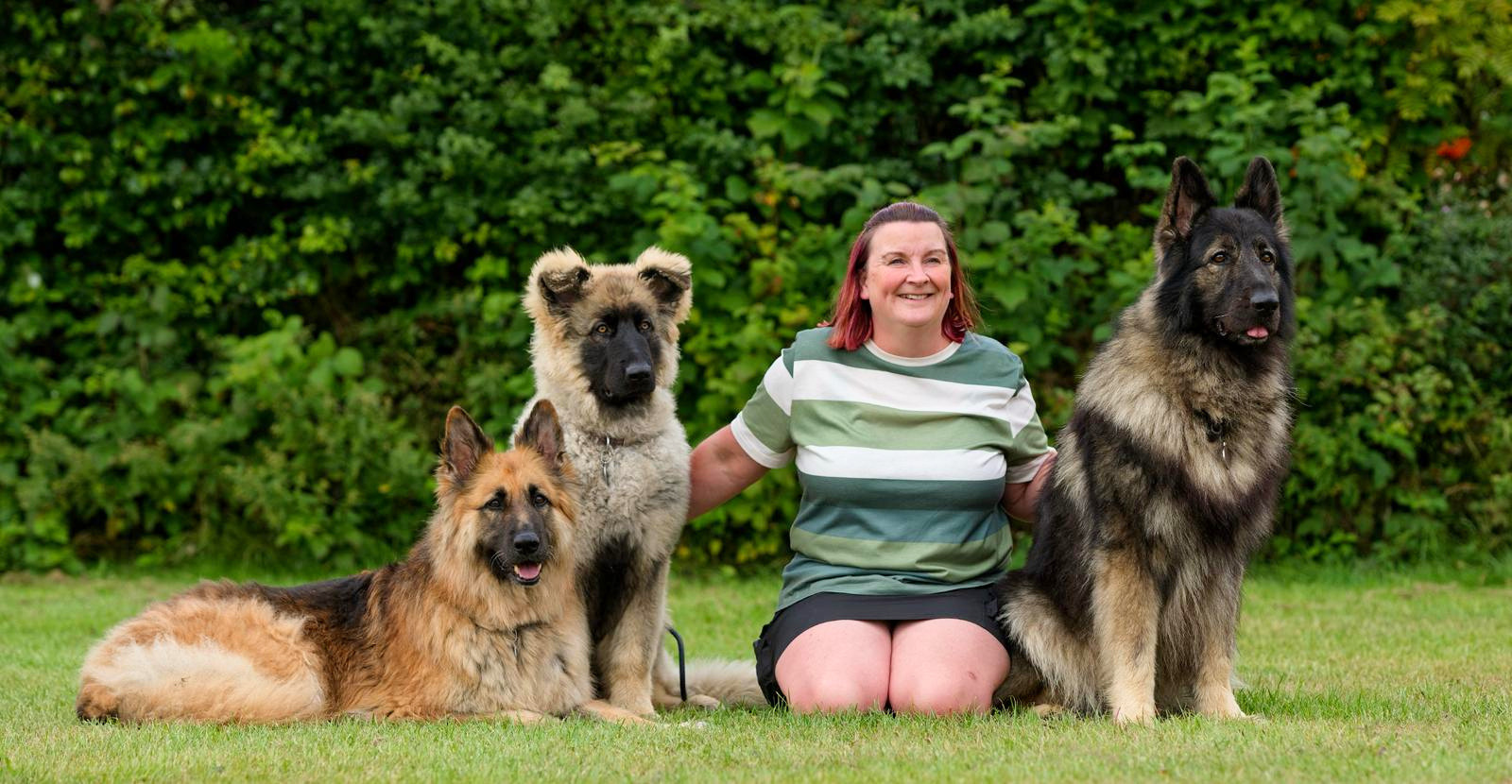
At Dugs Paws, dogs aren’t simply our job — they’re our way of life.
We love dogs deeply, but loving a dog doesn’t mean never saying no, never setting boundaries or avoiding difficult conversations.
To us, good dog training is about creating a relationship built on trust, communication, motivation, guidance and mutual understanding.
And that means looking at the whole dog — not just the behaviour we see on the surface.
Training the Dog in Front of You
There is no single method that is right for every dog.
Every dog arrives with their own genetics, breed traits, personality, experiences, motivations, strengths and challenges. Every owner is different too.
That’s why you’ll never find a one-size-fits-all training programme at Dugs Paws.
We adapt our approach to the individual dog and owner standing in front of us.
For one dog, we might need to build confidence. For another, we might need to create more motivation and engagement. Another may need clearer boundaries, greater structure or help learning how to control their impulses.
And very often, we need a combination of all of these things.
The dog tells us what they need. Our job is to listen, understand and train accordingly.
A Balanced Approach
Our training is balanced and relationship-based.
We use rewards such as food, play, praise and access to things the dog values to reinforce the behaviours we want. But communication works both ways. Dogs also need to understand when a behaviour isn’t appropriate.
Where necessary, we use fair, clear and proportionate corrections to communicate boundaries and help the dog understand what is expected of them.
A correction should never come from anger or frustration, and it should never be about frightening or overpowering a dog. It should provide information.
Our aim isn’t to constantly correct dogs. It’s to teach them well enough that they understand the choices available to them and increasingly choose the behaviours we want.
Reward what you want.
Guide what you don’t.
Be clear. Be fair. Be consistent.
Relationship Comes First
One of the biggest parts of our training is something that can easily be overlooked:
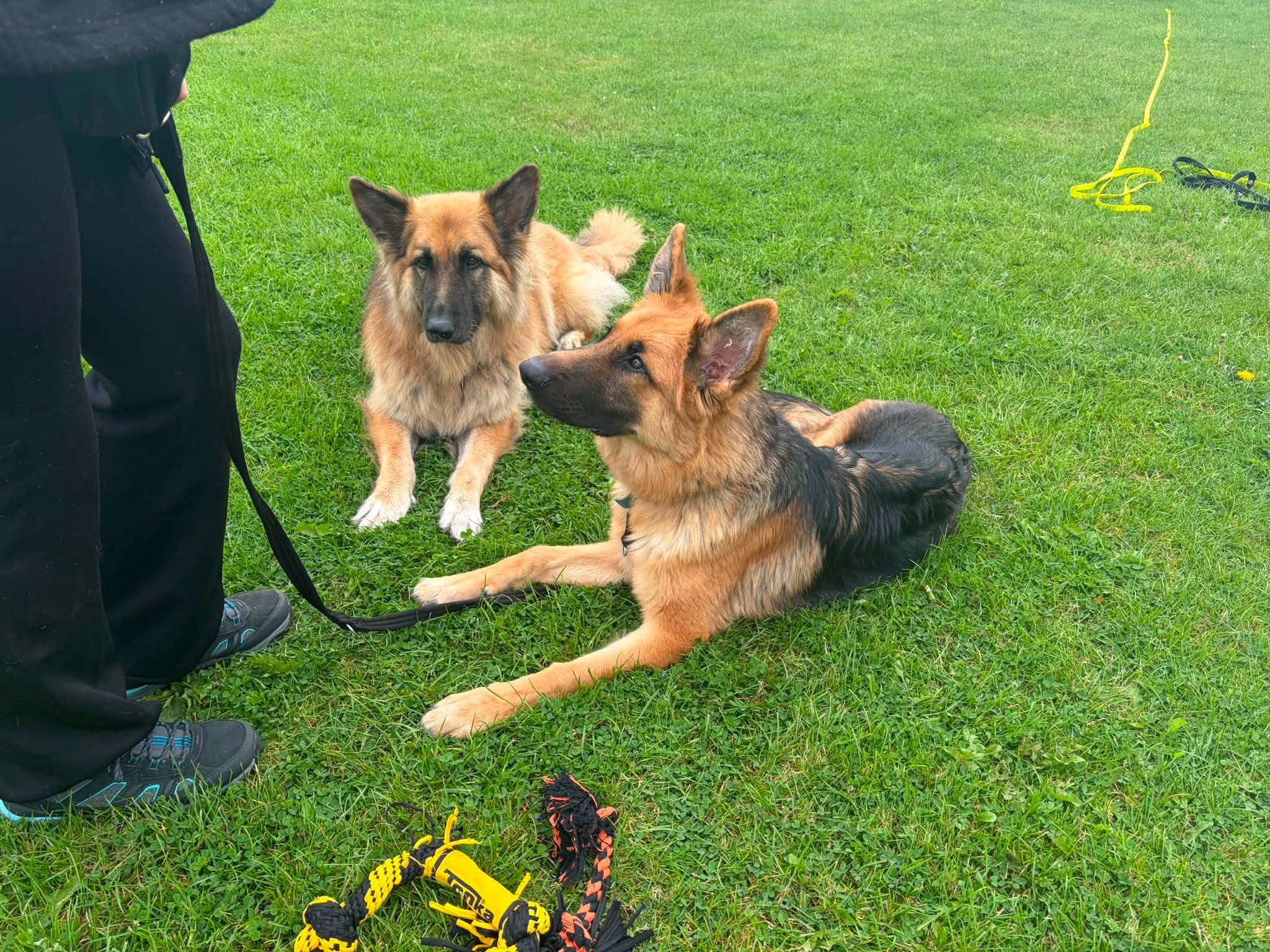
The relationship between you and your dog. We want your dog to see you as more than the person holding the lead or carrying the treats. We want you to become relevant.
Someone worth engaging with, someone worth playing with.Someone who provides guidance when things become difficult. Someone your dog can trust.
That’s why play, movement, engagement and co-operation feature so heavily in our training.
Training shouldn’t feel like an endless list of commands.
When the relationship becomes stronger, training starts to become something you do together.
Dogs Need Boundaries Too
We believe dogs thrive when life is clear and predictable. Freedom is important, so are boundaries. Dogs don’t understand our human world automatically. It’s our responsibility to teach them how to navigate it successfully.
That can mean teaching a dog not to rush through a doorway, pull towards another dog, jump all over visitors, ignore a recall or demand attention whenever they want it.
Setting boundaries doesn’t mean having an unhappy dog. Done fairly, boundaries actually create clarity and consistency. Your dog should know when it’s time to play, when it’s time to work, when it’s time to relax and what behaviours are expected of them.
Training Tools Are Just That — Tools
We don’t define good dog training by a particular piece of equipment.
Depending on the individual dog, owner and situation, different training tools may be discussed or recommended. No tool should replace good training, timing, relationship or understanding. Where equipment is introduced, we’ll explain what it does, why we’re considering it, how it should be used and whether it’s appropriate for your dog. There is no pressure to use a particular training tool simply because another dog does.
|
Because once again:
We train the dog in front of us.
Welfare Always Matters
Balanced doesn’t mean unfair.
Our dogs’ physical and emotional wellbeing remains central to every decision we make.|
We consider things such as:
* Breed and genetics
* Age and development
* Health and potential pain
* Stress and arousal
* Sleep and rest
* Diet and lifestyle
* Exercise
* Environment
* Previous learning and experiences
Sometimes what looks like a training problem isn’t simply a training problem.
Good trainers need to know when to train — and when to look deeper.
Real Life Matters More Than Perfect Obedience
We’re not interested in creating robots. A dog doesn’t need to stare at their owner every second of a walk or perform perfect obedience to have been successfully trained. We want dogs to be able to enjoy being dogs.
Sniff.
Explore.
Play.
Run.
Rest.
Interact appropriately, and experience the world.
But we also want owners to have the communication and control needed to keep those experiences safe and enjoyable.
That’s why our training focuses on skills that actually matter in everyday life — recall, loose lead walking, impulse control, neutrality, confidence, settling, engagement and the ability to make better choices around distractions.
No Judgement, just Progress.
Dog ownership isn’t always easy. Sometimes things go wrong, sometimes we accidentally reinforce behaviours we don’t want. Sometimes the advice we’ve previously followed hasn’t worked, and sometimes we simply don’t know what to do next.
You won’t be judged for that here.
Our job isn’t to make you feel guilty about what happened yesterday. It’s to help you understand your dog better and give you practical skills to move forward.We’ll be honest with you, we’ll support you, and we’ll expect you to put the work in too. Because lasting change doesn’t happen during one hour with a dog trainer. It happens in all the little moments between sessions.
Always Learning
Dog training is an enormous field, and nobody ever reaches the point where they know everything. We certainly don’t pretend to. We continue to learn, attend workshops, work alongside other trainers and challenge our own thinking.
If something can make us better trainers and help us better understand the dogs we’re working with, we’re interested in learning about it.
Our methods may continue to evolve as our knowledge and experience grow.
Our commitment to being fair, thoughtful and honest with dogs and their owners won’t.
Stronger Relationships Build Better Behaviour
At the heart of everything we do is a simple belief:
Build the relationship.
Create motivation.
Provide structure.
Communicate clearly.
Train the dog in front of you.
That’s the Dugs Paws approach 🐾